One of the questions we hear quite often during formal dining and High Protocol trainings is whether dessert flatware should already be on the table or brought out later with the dessert course itself. Many people assume there is one strict “correct” answer, but in reality, both methods are proper etiquette. The choice usually depends on the style of service, the formality of the event, and the type of experience being created for the guest.
In traditional formal dining, dessert flatware is commonly placed horizontally above the dinner plate as part of the original table setting. This serves both a practical and visual purpose. It helps create balance within the tablescape while also quietly signaling that dessert is part of the meal progression to come.
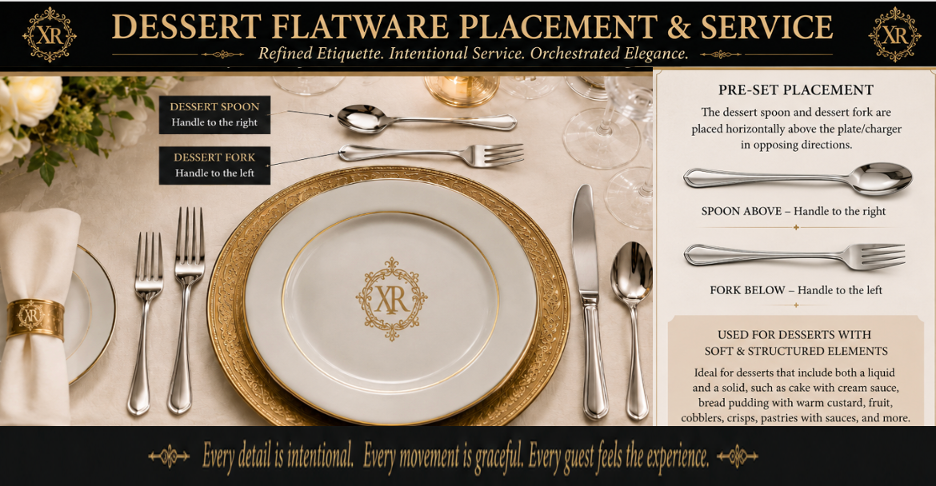
Typically, the dessert spoon is placed above the plate with the handle facing to the right, while the dessert fork sits just below it with the handle facing to the left. This positioning allows each utensil to be naturally moved into place when dessert is served.
In many modern fine dining settings, however, especially during chef-driven tasting experiences, dessert flatware may instead be presented immediately before the dessert course. This creates a cleaner table throughout the earlier courses and gives the service team more flexibility when pairing utensils with specific desserts. If using this method the dessert flatware would be placed to the side of the plate.
Within High Protocol service, the choice becomes even more intentional. Dessert flatware is not simply about where a spoon and fork sit on the table. It becomes part of the choreography of the meal itself. A pre-set dessert spoon may communicate structure and tradition, while presenting the utensils during service can add a sense of ceremony and flow to the evening.
Neither method is better than the other. They simply reflect different approaches to hospitality and presentation.
Understanding Each Method
To really understand dessert flatware placement, it helps to look beyond the utensils themselves and focus on the experience being created. In refined dining, every detail on the table communicates something to the guest, even subconsciously.
Dessert Flatware Pre-Set on the Table (The British Protocol)
Pre-setting dessert flatware has roots in classical European dining traditions and is still commonly seen during formal banquets, etiquette dinners, and many High Protocol experiences.
There are several reasons hosts and service teams may choose this approach:
- It creates a visually complete table from the start of the meal.
- Guests immediately recognize dessert as part of the dining experience.
- It minimizes interruptions later in service.
- It reinforces a feeling of structure and preparation.
From a visual standpoint, the horizontal placement above the charger also helps frame the place setting beautifully. In very formal dining environments, symmetry and balance contribute greatly to the overall feeling of elegance.
That said, pre-setting dessert flatware does require attention to detail. The utensils must remain perfectly aligned throughout the meal, and during multi-course dinners the table can sometimes begin to feel crowded if too many pieces are introduced at once.
Because of this, many modern hosts prefer a more minimal approach.
Dessert Flatware Presented with Dessert Service (The French Protocol)
In contemporary fine dining, dessert flatware is often brought to the table just before dessert is served.
This allows the earlier courses to feel visually cleaner while also giving the service team another opportunity to enhance the dining experience through presentation and timing. In these settings, the placement of the dessert utensil becomes part of the service itself rather than simply part of the table design.
This method works especially well when:
- The dessert requires a specialized utensil
- Multiple dessert courses are being served
- The presentation is intended to feel theatrical or immersive
- Table space is limited
- The overall service style is more fluid and modern
Within High Protocol dining, synchronized dessert flatware placement can become a graceful ritual all on its own. When done properly, even a simple movement feels polished and intentional.
Choosing the Appropriate Method
Ultimately, the decision comes down to the type of experience you want your guests to have.
A traditional formal dinner may benefit from the timeless elegance of pre-set dessert flatware, while a modern immersive dining experience may feel more refined when the utensils are presented during service.
Some helpful questions to consider include:
- How formal is the event?
- How many courses are being served?
- How much table space is available?
- Is the goal traditional elegance or modern presentation?
- Does the dessert require specialized service?
True etiquette is never about rigid performance or memorizing rules for the sake of appearances. At its heart, etiquette is thoughtful hospitality. The placement of dessert flatware should support the rhythm, comfort, and beauty of the overall dining experience.
The Xanadu Method
At Xanadu Kink 1-Day High Protocol Orchestrated Elegance Trainings, dessert flatware is traditionally pre-set above the dinner plate or charger as part of the formal tablescape.
The dessert spoon and dessert fork are positioned horizontally above the plate facing opposite directions. This setup works particularly well for desserts that contain both soft and structured elements such as cake with crème anglaise, bread pudding with warm custard, fruit desserts, cobblers, crisps, or pastries served with sauces or creams.
The dessert spoon sits above the fork with its handle facing right, while the fork rests below with its handle facing left.
After the main course has been cleared, the server then gracefully repositions the utensils before dessert service begins. The spoon is gently moved to the guest’s right side, followed by the fork being moved to the left. While simple, this small moment becomes part of the flow and elegance of the service itself.
Within High Protocol dining, even the movement of dessert flatware becomes intentional. Timing, presentation, and refinement all work together to create an experience where guests not only enjoy the meal but feel cared for throughout the entire evening.
Bring a Little Xanadu Into Your Life
Join my email list for updates on my upcoming memoir, Becoming Xanadu, and receive my free guide, The Xanadu Touch: Five Simple Ways to Make Someone Feel Special.
Sign up here, check your inbox for a confirmation email, and click the link. You’ll go straight to your free guide.