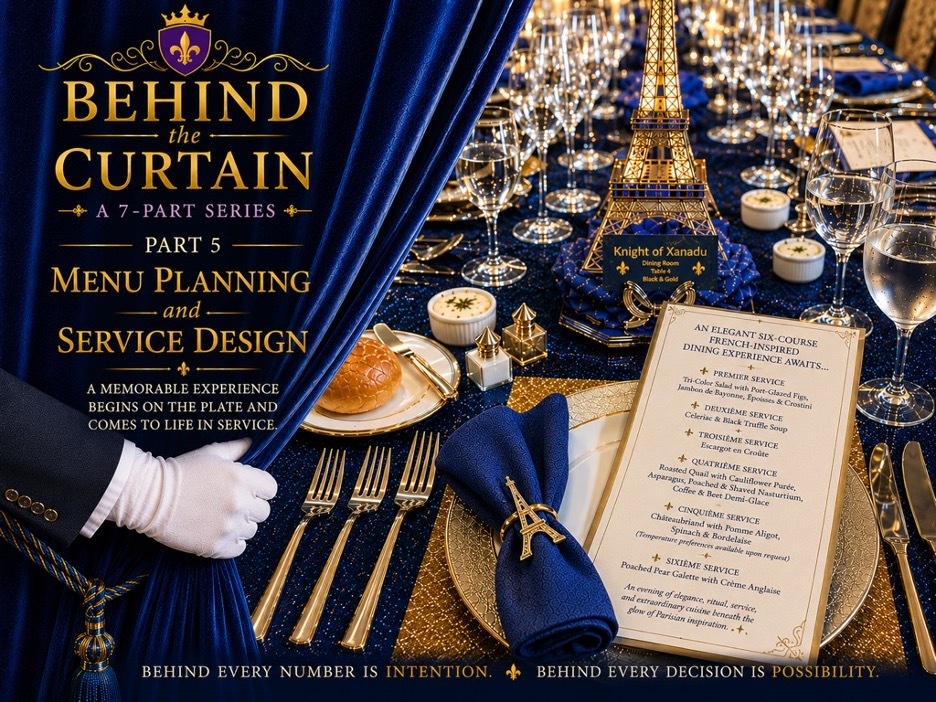
One of the questions we are often asked is, “How do you decide on the menu?”
The answer depends entirely on the type of event.
For a Royal Afternoon Tea, the menu is fairly standardized, although it can be as simple or as elaborate as you choose. Our most recent Afternoon Tea featured cucumber and cream cheese, egg salad, smoked salmon and Boursin, pastrami with horseradish on rye, and turkey with cranberry sandwiches.
The hardest item to source these days is actually the clotted cream. I used to be able to find it at my local grocery store, but not anymore. Now I order it from Amazon to ensure we can provide the authentic tea experience our guests expect.
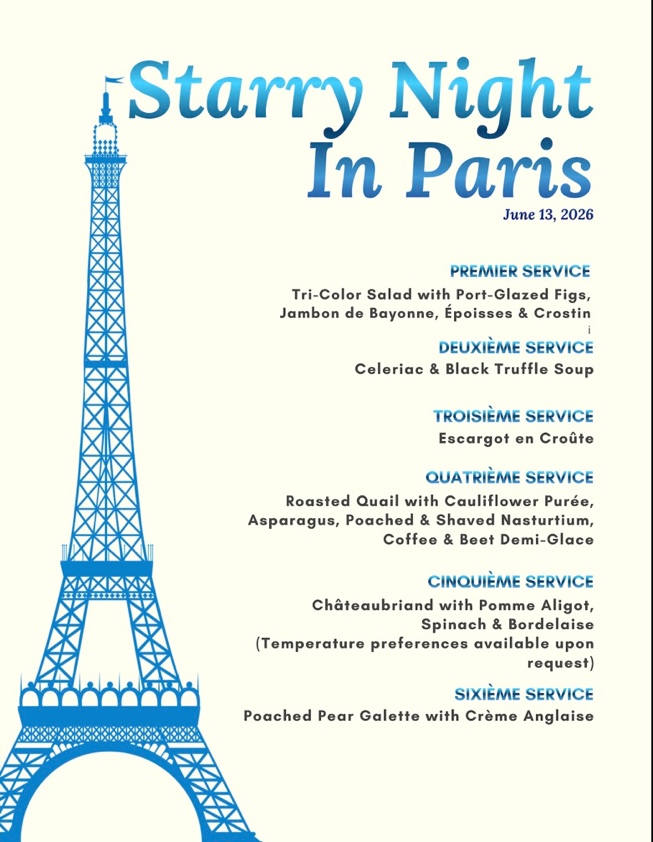
For a High Protocol dinner, the process is very different. As soon as I settle on a theme, the chef and I begin planning. For A Starry Night in Paris, that naturally meant a French-inspired menu.
When the chef first showed me the menu for Starry Night in Paris, my immediate reaction was, “I’m not eating any of this.” It wasn’t until Knight of Xanadu started translating the menu items into plain English that I began to warm up to the idea. Even then, when I saw escargot listed as one of the courses, I remember thinking, “I might just sit that one out.”
Menu For a Starry Night in Paris
Before we can finalize any menu, however, we need information from our guests.
As registration forms begin arriving, I carefully review every dietary restriction, allergy, mobility concern, and special request. Once registration closes, I provide that information to the chef so we can make accommodations. Sometimes that means modifying a dish; other times it means creating an entirely separate course for a guest. The goal is simple: every guest should feel welcomed, cared for, and included.
That sounds straightforward, but sometimes even the best plans go sideways.
At our most recent Afternoon Tea, two guests had special considerations. One guest was celebrating a birthday, required a specialized chair for comfort, and had dietary restrictions. Another guest was gluten-free and did not eat meat.
I communicated both situations to the chef and even purchased a birthday cake for the first guest. Unfortunately, that guest canceled the morning of the event.
I was disappointed. She is someone who is known within the community, and I had invested a great deal of effort into making her day special.
When we arrived at the venue, I was so focused on adjusting plans for the cancellation that I told the chef not to worry about the dietary accommodations because “she canceled.”
The problem was that I became so focused on Guest One’s cancellation that I completely forgot about Guest Two and inadvertently canceled all of the dietary accommodations as well.
About forty minutes into the tea, I noticed the second guest had barely touched any of the food. When I checked in with her, she gently reminded me of her dietary restrictions.
My heart sank.
In that moment, I realized exactly what had happened. I had become so focused on Guest One’s cancellation that I had completely overlooked Guest Two’s needs.
I felt terrible.
I apologized profusely, and thankfully the chef immediately began preparing alternatives. What I remember most, however, was the guest’s graciousness. She didn’t have to be, because the mistake was entirely mine.
Why am I sharing this story?
Because no matter how much planning goes into an event, mistakes can still happen. High Protocol event planning is not about achieving perfection. It is about recognizing mistakes quickly, taking responsibility, correcting them, and continuing to serve your guests with care and professionalism.
Menu planning is only one part of service design.
Beverage service, for example, requires just as much intentional planning. I typically assign one or two dedicated servers to manage wine service and water refills, so guests rarely need to ask for anything.
The ideal serving ratio varies depending on the event. For our High Protocol dinners, I prefer a one-to-one Royal Silent Service model whenever possible. I have occasionally assigned one server to two guests, but if I can avoid it, I do. I also prefer assigning an additional server to Knight of Xanadu so I can focus on my role as majordomo and oversee the overall guest experience.
Then there is the schedule.
Every event begins with a carefully crafted timeline, but no timeline survives contact with live guests exactly as written.
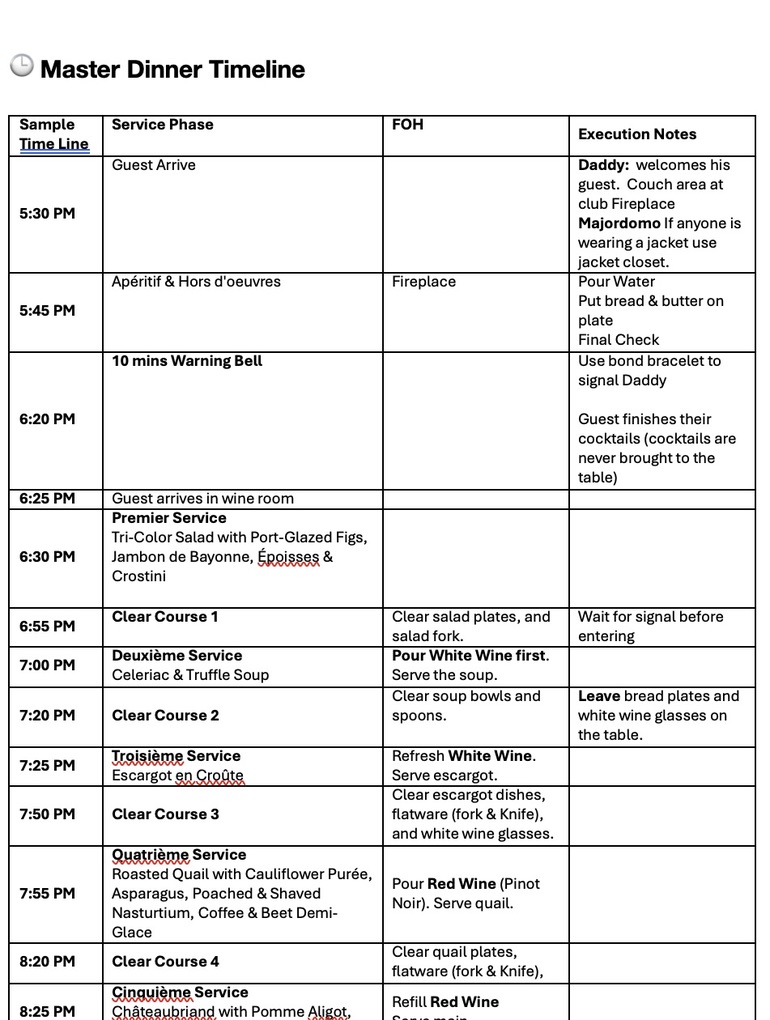
I create a comprehensive service schedule before every dinner, outlining cocktail service, seating, courses, transitions, and ceremonial elements. I make 3 copies of the schedule 1-for myself, 1-for Knight of Xanadu, and 1-for the chef. Yet the pace of the evening is ultimately determined by the guests themselves and Knight of Xanadu. Some groups linger over conversation and savor every course. Others (not usually) move through dinner a bit more quickly.
Service Schedule for Starry Night in Paris
The secret is learning when to lead…. and when to follow.
Another thing I spend hours on is the seating chart.
Before every event, I spend time getting to know each guest as best I can. I revisit their profile page, read about their interests, and think carefully about who might enjoy sitting together and who could benefit from a new introduction.
If two people already know each other extremely well, I generally avoid seating them next to one another. I do that because I want the conversation to include everyone at the table, not become a private discussion between two friends while everyone else sits quietly around them.
I also look for common interests. Perhaps two people share an interest in fire or electrical play. Perhaps they share similar experiences within the lifestyle. Those connections can help spark meaningful conversations and create new friendships.
The seating chart is about far more than deciding where people will sit. It is another way of helping guests feel comfortable, connected, and included in the overall experience.
I cannot overstate the importance of a thoughtfully designed seating chart. When done well, it encourages conversation, fosters new connections, and helps guests feel like they belong. When done poorly, it can create discomfort, isolation, and missed opportunities for meaningful interaction.
In many ways, a seating chart can make or break an event. Long before the first course is served, it begins shaping the guest experience.
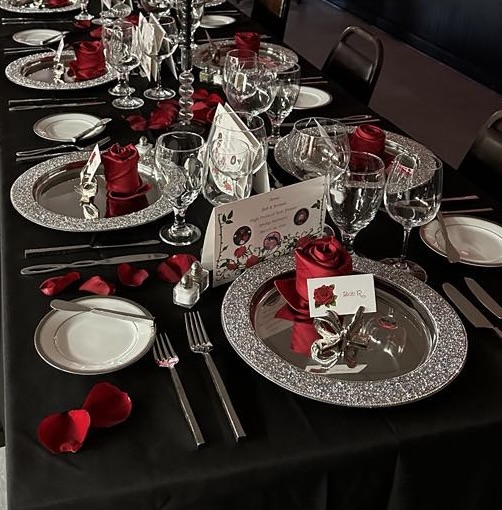
Photo High Protocol Dinner Reception for 12 Masters/Doms and 12 Servers. (Rose Ceremony Reception)
The Experience Behind the Experience
Although we carefully design the experience, we always take our cues from the left side of the slash—the Dominants and Tops leading the dynamic. Their comfort, enjoyment, and engagement help determine the rhythm of the evening.
Because at the end of the day, menu planning and service design are not really about food at all.
They are about creating an experience where every guest feels seen, welcomed, and cared for. That is The Xanadu Method. From the menu and wine pairings to the seating chart and service flow, every decision is made with that goal in mind.
If we’ve done our job well, guests leave remembering how the evening made them feel—not the countless logistics that made it possible.
By this point, months of planning have gone into what guests will experience over the course of a single evening. Every decision, from the budget to the menu, from the seating chart to the service flow has been made with one thing in mind: creating an experience that feels effortless to the people attending.
Stay Tuned for Part 6
In Part 6, we’ll finally open the dining room doors. I’ll take you behind the curtain on event day itself and share what happens when months of planning, preparation, and practice finally meet the reality of live guests.
If you made it to the end of Part 5, please leave a comment and let me know. Writing is often a conversation rather than a monologue, and I’d love to know who’s reading and following along as we journey Behind the Curtain together.
Bring a Little Xanadu Into Your Life
Join my email list for updates on my upcoming memoir, Becoming Xanadu, and receive my free guide, The Xanadu Touch: Five Simple Ways to Make Someone Feel Special.
Sign up here, check your inbox for a confirmation email, and click the link. You’ll go straight to your free guide.