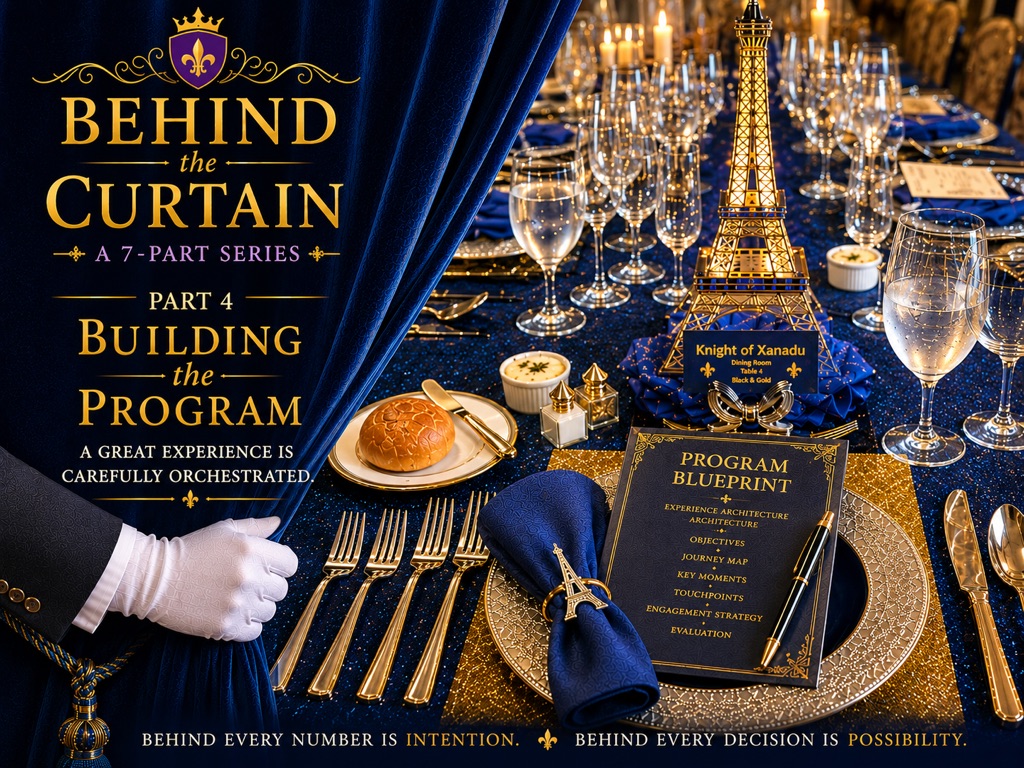
I am writing this series while living it.
As I sit here writing, it is 5:00 in the morning, and we are only a few days away from A Starry Night in Paris. Earlier this evening, I received a cancellation from someone in the community whom I admire. I had been looking forward to sharing this experience with them and will certainly miss having them there.
Although disappointed, it wasn’t simply about filling a seat. I had hoped they would see firsthand what we are trying to create and understand the purpose behind both the training and the event itself. Their perspective mattered to me, and I had been looking forward to hearing their thoughts afterward.
As I continue writing this, part of me wonders whether I should have canceled the event a few weeks ago. But we are far too close now to turn back. This will likely be the last 1-Day Intensive we host for a while, perhaps even the last one we produce ourselves this year. Although I do love Christmas. We do have other events scheduled for organizations and groups, including our own Velvet Harvest Soirée, but those are very different from our educational Intensive.
Part of me wonders if the timing is simply wrong. The beginning of summer may not be the best season for an event like this. Families are busy, schools are wrapping up for the year, vacations are being planned, and calendars quickly fill up. These are all things event planners must consider, and sometimes the lessons are learned the hard way.
If I am being honest tonight, I am feeling discouraged and a bit heartbroken.
Heartbroken that someone I hoped to attend canceled. Heartbroken that, for the first time, one of our 1-Day Intensives did not sell out. Heartbroken that I missed the mark on the budget by far more than I intended.
As the event draws closer, the reality of every decision begins to weigh heavily. After finalizing everything with the chef, confirming the venue, printing materials, preparing seating charts, and handling countless other details, a cancellation can feel crushing. When you are the person responsible for bringing all of the pieces together, every empty seat feels personal, even when you know it probably isn’t.
Hosting a High Protocol event requires far more than time and money. It demands planning, problem-solving, flexibility, and a tremendous amount of emotional investment. You pour your heart into creating an experience for others, so when something doesn’t go as planned, whether it’s an unbalanced seating chart, a last-minute cancellation, or another unexpected challenge, it can be difficult not to take it personally. There will be moments of excitement and moments of doubt, but those are simply part of creating something meaningful.
But despite all of that, it is still my responsibility to make this experience the best it can possibly be for those who are attending.
I share this not to seek sympathy, but to offer a glimpse behind the curtain.
When people think about High Protocol events, they often focus on the beautiful tablescapes, the formal attire, the elegant service, and the carefully orchestrated rituals. What they rarely see is the emotional energy invested behind the scenes.
Perhaps that is one reason why High Protocol events are relatively rare and why it is such a privilege to attend one.
Since A Starry Night in Paris was designed as an educational event, much of the program development had already been completed. We have taught versions of this intensive many times before, and each event builds upon the lessons of the last.
I still remember the very first one we taught.
It took me months to develop the curriculum. I remember teaching an introductory Zoom session to those attending the week before the event while Knight of Xanadu drove us down the highway at night. We were on our way to Virginia to visit our daughter. Looking back now, I realize just how much I have grown since that first class.
Every time we offered the training, I refined it. I adjusted the presentations, added material, removed material, and reworked the flow. Back then there were no workbooks. In fact, I can barely remember what I originally called the class.
Over the years, however, those pieces slowly evolved into what is now Orchestrated Elegance: Attending a High Protocol Event with Confidence.
Today, that program includes a comprehensive workbook, practical exercises, service demonstrations, and hands-on training designed to help participants feel confident and successful when attending a High Protocol event.
I also wrote a class and workbook on planning High Protocol events themselves, although I do not teach it very often.
Why?
Because most people want to attend High Protocol events, but very few want to shoulder the responsibility of creating them.
We have attended many wonderful High Protocol events over the years. Some provide a brief thirty-minute orientation before dinner for the servers. Others hand servers a set of instructions to read before attending and then proceed directly into the experience. There is absolutely nothing wrong with those approaches, but they are very different from what we do. I have found that more preparation and hands-on practice tend to leave attendees feeling more confident when they arrive. Our focus has always been on education.
The most important goal for me is helping people feel confident. Whether someone attends one of our events or someone else’s, I want them to walk into the room knowing what to expect and feeling prepared to participate. Our goal is that you can attend any High Protocol event feeling fabulous and confident whether it’s ours or someone else’s.
Part of that confidence comes from our practicums.
Rather than simply explaining service, we allow all participants to practice it. They learn table setting, service techniques, dining etiquette, and the details that transform a meal into an experience. They develop pride in their presentation and gain confidence in their abilities before guests ever arrive.
The rituals and ceremonies we teach are based on Royal Silent Service, the same service model we use at our dinners, teas, and formal events. The goal is to create an experience reminiscent of dining with the Queen herself.
Ironically, Afternoon Tea service is often far more demanding on our servers than a High Protocol dinner.
Of course, all rituals and ceremonies must remain adaptable. As much as we value tradition, the comfort and accessibility of our guests always come first. The goal is not perfection. The goal is to create an experience that allows everyone to participate with dignity and confidence.
Another important lesson I have learned is that educational programming requires intentional pacing.
If you are planning any type of educational event, build breaks into the schedule. Give people opportunities to stand, stretch, move around, and reset.
There’s a reason why church is only 90 minutes or less. Adult attention spans are limited. While engagement levels vary from person to person, most learners begin to lose focus after twenty to forty minutes of continuous instruction. That is why successful educational programs alternate between teaching, discussion, demonstrations, activities, and breaks.
People learn best when they have opportunities to absorb information rather than simply receive it.
Finally, let’s talk about something that event planners often avoid discussing; charging for attendance.
Many people hesitate to charge for educational events, or even High Protocol dinners especially when they’re trying to build community. However, I have learned that free registrations often come with a hidden cost.
In my experience, the majority of last-minute cancellations come from people who have not invested financially in attending. When there is no financial commitment, it becomes much easier to back out at the last minute.
Unfortunately, those cancellations can be extremely expensive for the organizer.
Meals have already been ordered. Supplies have already been purchased. Seating charts have already been finalized. The financial obligation remains whether the attendee shows up or not.
Charging even a modest registration fee creates commitment and accountability. It helps participants value the experience, and it helps protect the event from the financial impact of last-minute cancellations.
Building the program is about far more than creating lesson plans and schedules.
It is about creating an experience that educates, inspires, and empowers those who attend. It is about balancing logistics, budgets, personalities, learning styles, and expectations. Most importantly, it is about continuing to show up and give your best, even on the days when things do not go according to plan.
Because behind every elegant event is someone working tirelessly behind the curtain to make the magic happen.
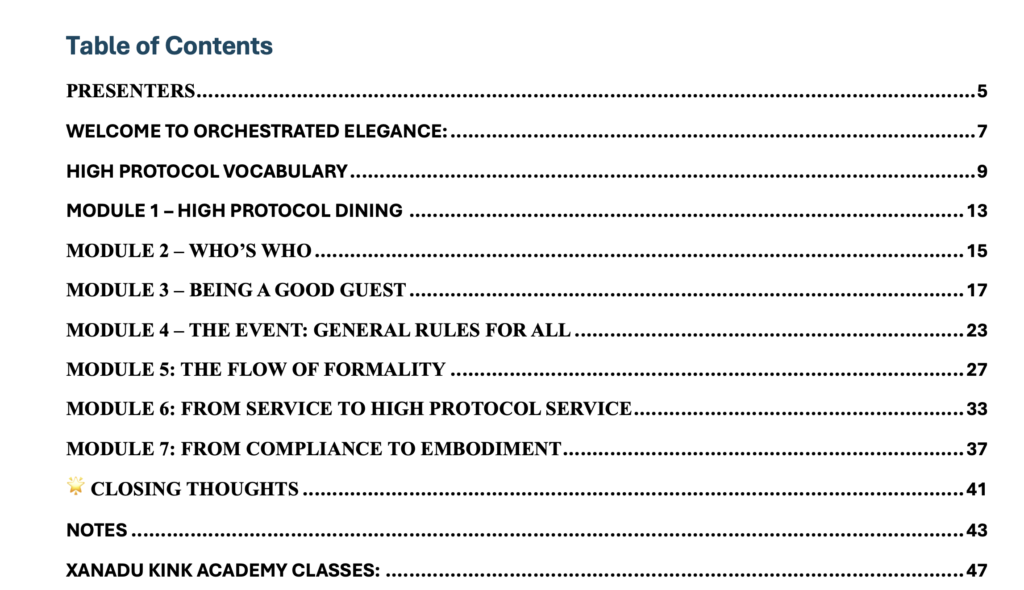
For those curious about what the program actually looks like, here is the current table of contents from our Orchestrated Elegance workbook.
In Part 5, we’ll talk about one of my favorite parts of planning an event: the menu. I’ll share how we work with chefs, accommodate dietary restrictions, determine staffing needs, and design service flow. We’ll also talk about some of the mistakes we’ve made along the way and why menu planning is about much more than choosing what people are going to eat.
If you made it to the end of Part 4, I’d love for you to leave a comment and let me know. Writing is often a conversation rather than a monologue, and I’d love to know who’s reading and following along as we journey Behind the Curtain together.
If you’re just discovering this series, welcome! You can catch up from the beginning here:
- Behind the Curtain Part 1: Choosing the Experience
- Behind the Curtain Part 2: Budgeting and Feasibility
- Behind the Curtain Part 3: Designing the Guest Experience
I hope you’ll join me as we continue exploring what really goes into creating High Protocol events—from the inspiration and planning to the challenges, triumphs, and everything in between.
Bring a Little Xanadu Into Your Life
Join my email list for updates on my upcoming memoir, Becoming Xanadu, and receive my free guide, The Xanadu Touch: Five Simple Ways to Make Someone Feel Special.
Sign up here, check your inbox for a confirmation email, and click the link. You’ll go straight to your free guide.